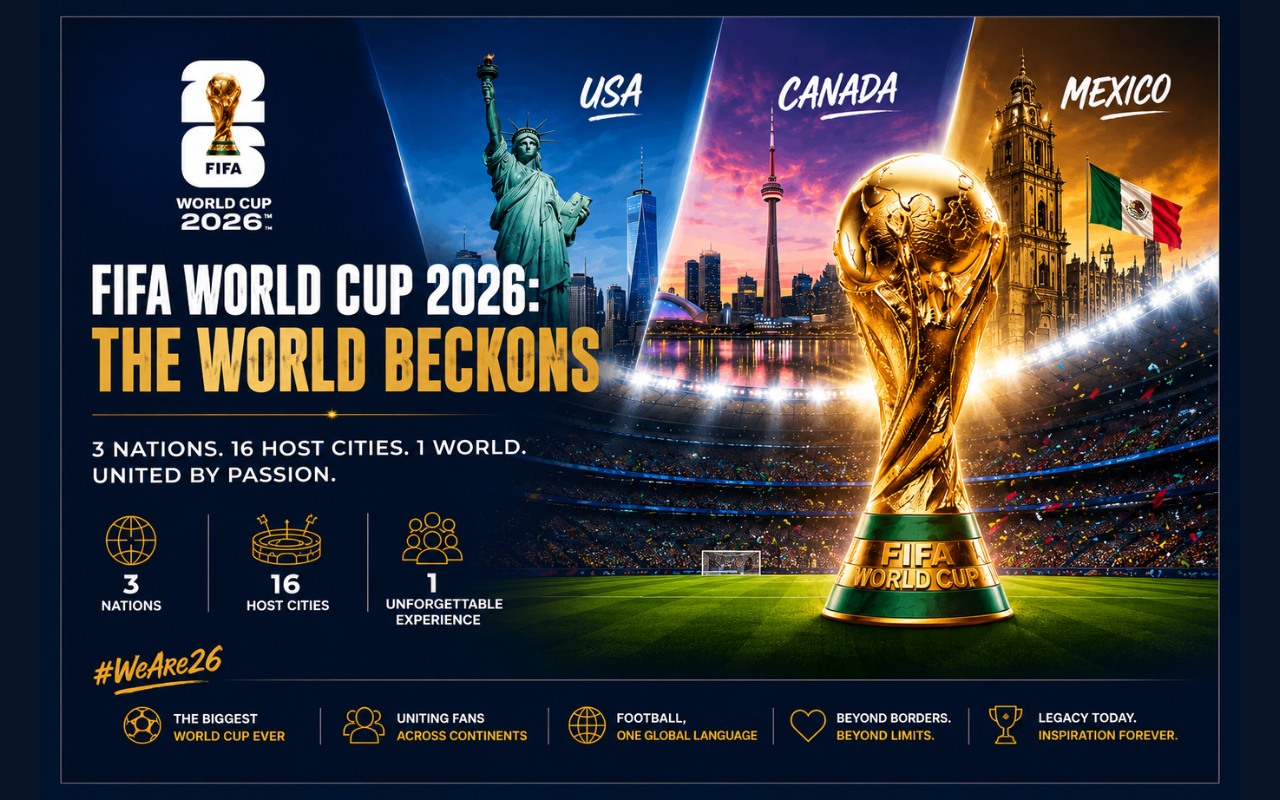
As the first 48-team World Cup kicks off across the vast expanse of North America, the beautiful game finds itself entangled in a narrative as complex as the continent itself. This is not merely a tournament; it is a grand experiment, a sporting behemoth stretching from Vancouver to Mexico City, and a stage upon which the political dramas of our time are played out. The 2026 finals, co-hosted by the United States, Canada, and Mexico, represent a historic leap—the first time 48 nations will contest for football's ultimate prize, a decision that drew heavy criticism but now commands the world's attention.
The Shadow of Politics
No edition of the World Cup has ever been immune to the currents of geopolitics, yet 2026 feels particularly charged. In Los Angeles, a city pulsating with World Cup fever ahead of the USA vs Paraguay clash, fans have voiced sharp criticisms of tournament organisers and the travel policies enforced by the Trump administration. The juxtaposition is stark: the unifying power of football set against the divisive realities of immigration and border control. As one fan lamented to Al Jazeera, 'We love the game, but the policies make it hard to celebrate freely.' Meanwhile, Argentina's players have reignited a long-standing dispute by holding up placards referencing the Falkland Islands, a gesture that underscores how the pitch can never be fully divorced from history.
Infantino's Plea for Calm
FIFA President Gianni Infantino, ever the diplomat, has taken a conciliatory tone amid the backlash. 'I am no king,' he insisted, urging patience and relaxation. His plea, reported by the Los Angeles Times, comes as the organisation grapples with complaints over visa procedures and ticket prices. The expansion to 48 teams has stretched infrastructure and tested the patience of fans, but Infantino's message is clear: this is a marathon, not a sprint. The World Cup, he argues, is a force for good, a global gathering that transcends political squabbles. Yet, for many, the friction between FIFA's utopian vision and the gritty reality of hosting a tournament in a politically polarised region remains palpable.
On the Pitch: Spain's Birthday Hope
Amid the off-field turmoil, the football itself continues to enchant. Spain, a nation with a rich footballing heritage, is hoping to celebrate Lamine Yamal's birthday with a World Cup semi-final win. The young prodigy, already a symbol of Spain's vibrant future, embodies the romance that draws billions to the sport. His potential triumph would be a poetic counterpoint to the chaos surrounding the event—a reminder that, at its core, the World Cup is about joy, skill, and the unbreakable spirit of competition. For fans in North America, the chance to witness such moments live is a privilege, even if the journey to the stadium is fraught with bureaucratic hurdles.
The Fan Experience: A Tale of Two Worlds
For supporters, the 2026 World Cup is a mixed bag. In Mexico, the atmosphere is electric, with the iconic Azteca Stadium ready to host matches that echo the nation's footballing soul. In Canada, the tournament brings a fresh energy to a nation still carving its identity in the sport. Yet in the United States, the experience is marred by logistical nightmares and the omnipresent shadow of Trump-era policies. Tickets remain a hot commodity, with prices soaring on secondary markets, and visa issues have kept some international fans away. Despite this, the passion endures. As one fan told Sky Sports, 'We've waited decades for this. Nothing will stop us from watching our heroes.' The resilience of the football faithful is a testament to the game's enduring power.
Conclusion
The 2026 World Cup is more than a sporting event; it is a mirror reflecting the complexities of our world. From the political tensions to the logistical challenges, and from the hope of young stars to the perseverance of fans, this tournament encapsulates the beautiful game's ability to both divide and unite. As the semi-finals approach, one thing is certain: the romance of football will survive the noise. For those seeking deeper insights into the tactical evolution and historical context of the game, SokaFundi offers unparalleled analysis and community. The future of football is being written now, across three nations, and the story is far from over.
