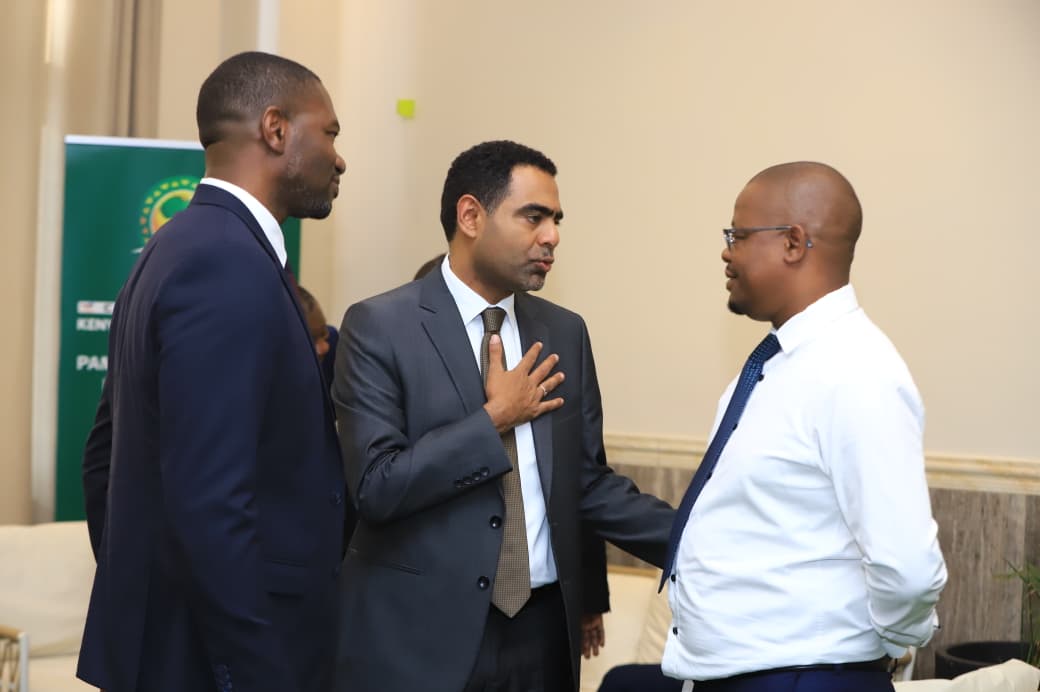
The Confederation of African Football (CAF) has thrown its full weight behind the East African triumvirate of Kenya, Uganda, and Tanzania ahead of the 2027 Africa Cup of Nations (AFCON). Acting General Secretary Samson Adamu, in a statement that resonated with tactical precision, declared: “We are confident AFCON 2027 in East Africa will be successful.” The declaration comes as CAF’s inspection team prepares to tour the region, evaluating stadia, training facilities, and infrastructure. For a tournament that will span three nations, the logistical coordination is as intricate as a high-pressing 4-3-3, and Adamu’s confidence suggests the groundwork is solid.
The Tri-Nation Formation: A Tactical Masterstroke
Hosting across three countries—Kenya, Uganda, and Tanzania—presents a unique tactical challenge. Unlike a single-host edition, the 2027 tournament will require seamless transitions between venues, akin to a fluid 3-5-2 shape where each unit must cover for the other. Adamu emphasised that the ‘PAMOJA’ (together) spirit is key. “The groundwork laid is impressive,” he noted, drawing parallels to a well-drilled midfield triangle that controls the tempo. CAF’s backing indicates that the host nations have addressed potential weaknesses, such as transport connectivity and security, which could otherwise disrupt the tournament flow.
In Possession: Infrastructure as the First Phase
Possession in football is about control; for AFCON 2027, control means infrastructure. CAF’s inspection will focus on stadia in Nairobi, Kampala, and Dar es Salaam, among others. Adamu’s confidence stems from the fact that each host has upgraded its key venues—Kenya’s Kasarani Stadium, Uganda’s Mandela National Stadium, and Tanzania’s Benjamin Mkapa Stadium—to meet CAF standards. This is akin to a team ensuring its defensive line is set before building attacks. The Acting General Secretary’s statement that “we are on track” suggests the hosts have already neutralised potential defensive vulnerabilities.
Out of Possession: Pressing Triggers and Security Nets
Just as a team without the ball must press intelligently, the tri-nation hosts must coordinate off-field logistics. Adamu highlighted that CAF has set “benchmarks” for success, aiming to surpass Morocco’s record-breaking 2025 edition. This requires pressing triggers—clear communication protocols between the three countries—to avoid bottlenecks. Security, too, is a pressing trigger; the region has faced challenges, but Adamu’s confidence implies that robust security nets are in place. The hosts are forming a compact block, much like a mid-block defence, to ensure smooth operations.
AFCON 2027 promises numerical superiority in terms of economic impact. The tournament is expected to attract millions of fans, creating a ‘man advantage’ for local businesses. Adamu’s confidence extends to the social legacy: “This will set a new record beyond Morocco.” The tri-nation format allows for shared resources, similar to a team using overloads in wide areas. Each host brings unique strengths—Kenya’s hospitality, Uganda’s passion, Tanzania’s growing football culture—creating a dominant collective.
Conclusion
Samson Adamu’s confidence in AFCON 2027 is not mere rhetoric; it is rooted in tangible preparations. The tri-nation hosts have laid a foundation that mirrors a well-coached team: disciplined in structure, ambitious in attack, and resilient in defence. If the inspection team validates this groundwork, East Africa will not only host a successful tournament but also set a new benchmark for continental football. For tactical enthusiasts eager to analyse such multi-nation logistics, platforms like SokaFundi offer deep dives into football strategy and tournament dynamics. The countdown to 2027 has begun, and the formation looks promising.
