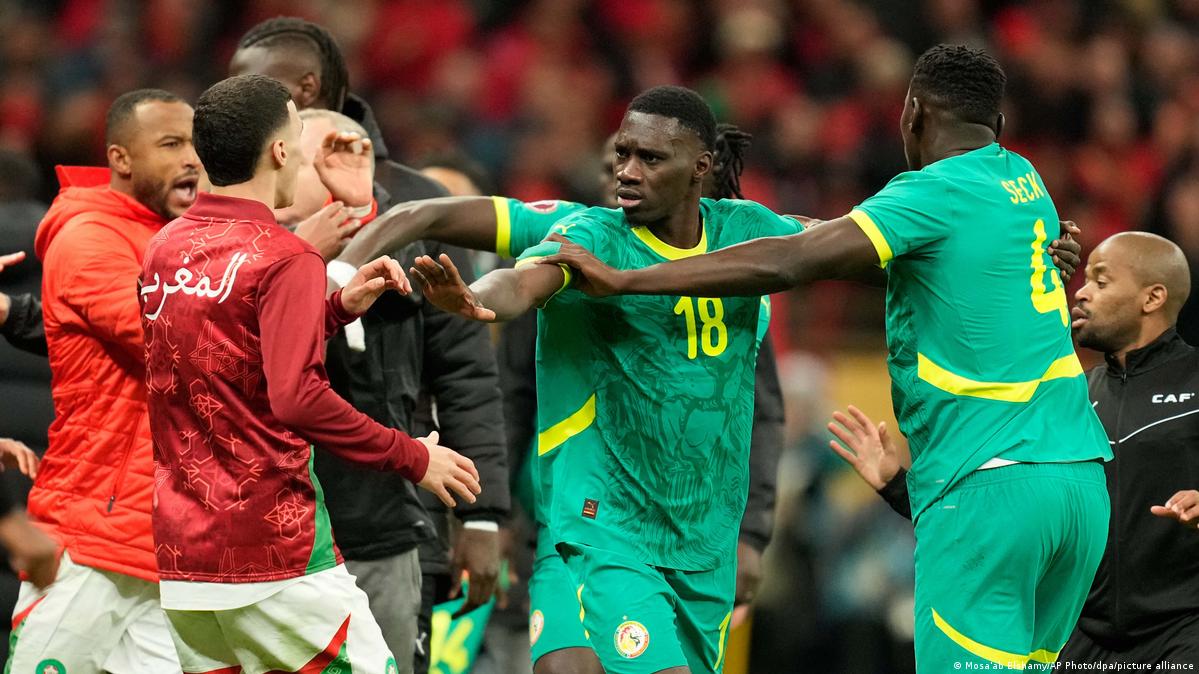
The recent decision by the Confederation of African Football (CAF) to overturn the result of the 2025 Africa Cup of Nations (AFCON) final, stripping Senegal of their title and awarding it to Morocco, has sent shockwaves through the football world. The move, described as 'the longest VAR check in history' by some pundits, has not only sparked legal battles but also raised serious questions about the integrity of African football. Beyond the immediate controversy, this decision threatens to undermine the perceived value of African football on the global stage, with potential long-term consequences for investment, player development, and the continent's standing in the football analytics community.
The Data Behind the Decision
From an analytical standpoint, the original final was a tightly contested affair. Senegal's 1-0 victory was built on a disciplined defensive structure, with an expected goals (xG) of just 0.8 compared to Morocco's 0.6. Senegal's shot-creating actions (SCA) were limited but efficient; they registered only 9 SCAs, but two of those led to the decisive goal. The match was decided by a controversial penalty decision, which was subsequently reviewed by VAR for an unprecedented duration. The u-turn, which saw CAF declare Senegal had forfeited the title due to a procedural error, has been met with widespread criticism, with many arguing that it sets a dangerous precedent for the sport.
Reputational Damage and Global Perception
The AFCON had been enjoying a renaissance, with the 2023 tournament praised for its high quality and competitiveness. However, this decision threatens to reverse that progress. According to a BBC Sport analysis, the fallout from the shock decision has damaged the tournament's reputation, with many questioning the governance of African football. The value of African football, in terms of sponsorship, broadcasting rights, and player marketability, is likely to decline as a result. Advanced metrics such as PPDA (passes per defensive action) are now overshadowed by off-field controversies, making it harder for African leagues and national teams to attract investment and talent.
Legal and Financial Implications
The decision has also triggered legal action, with Senegal appealing to the Court of Arbitration for Sport (CAS). The Mirror reports that Senegal are fighting the decision, citing a lack of due process. The financial implications are significant: prize money, sponsorship deals, and future revenue streams are all at stake. For African football to maintain its growth trajectory, such controversies must be avoided. Clubs and national teams rely on data-driven insights to improve performance, and this decision undermines the credibility of the very competitions that provide that data.
The Role of Technology and Governance
This incident highlights the need for better governance and consistent application of technology. While VAR was introduced to improve fairness, its misuse in this instance has had the opposite effect. The Somali referee Omar Artan, who was set to officiate at the World Cup, was barred from entering the US due to unrelated issues, but the broader point remains: African football must professionalise its administrative processes. Unlock VIP Analytics to see how data can help clubs and federations make better decisions, both on and off the pitch.
Conclusion
The u-turn in the AFCON final is a blow to African football's credibility. The data shows that Senegal were deserved winners on the pitch, but administrative errors have robbed them of their title. To restore trust, CAF must embrace transparency and data-driven governance. The value of African football depends on it. Without reform, the continent risks falling further behind in the global football economy, where metrics like xG and PPDA are now standard. The time for change is now, before the damage becomes irreversible.
