The Morocco Blueprint: More Than a Fairy Tale
The question has haunted African football for decades, a ghost that lingers in every penalty shootout heartbreak and every group-stage exit. When will an African side win the World Cup? It is a query that feels both audacious and inevitable, like asking when the tide will finally claim the shore. For years, the answer was shrouded in pessimism, a narrative of "almost but not quite." Then came December 10, 2022, when Morocco, a team of grit, tactical genius, and unbreakable spirit, became the first African nation to reach a World Cup semi-final. They didn't just knock out Portugal and Belgium; they dismantled the psychological barrier that had long imprisoned the continent's ambitions.
But here is the twist: that historic run in Qatar was not the peak of the mountain. It was the first camp at base camp. The real summit - lifting the trophy - is now within a generation's reach, and the timeline is far shorter than most pundits dare to predict. Think about that for a second. An African nation, with proper investment, a golden generation, and the expanded 48-team format, could realistically hoist the World Cup by 2030 or 2034. This is not blind optimism. This is a tactical, data-driven, and deeply psychological analysis of where African football stands today and the explosive trajectory it is on.
To understand the future, we must first dissect the present. Morocco's run at Qatar 2022 was not a fluke. It was the culmination of a decade-long project that prioritized defensive organization, player development in European academies, and a coach, Walid Regragui, who understood the unique identity of his squad. They conceded only one goal in open play across six matches, a goal that came from a deflected shot against Canada. They beat Belgium, Spain, and Portugal, all nations with storied World Cup histories. They did it with a squad that was, on paper, less talented than their opponents but infinitely more cohesive.
This is the critical lesson for every African federation: the World Cup is not won by the most individual talent alone. It is won by the most disciplined system. Morocco's success was built on a high-pressing 4-1-4-1 shape that suffocated space, a midfield trio of Sofyan Amrabat, Azzedine Ounahi, and Sofiane Boufal that outworked and out-thought their opponents, and a fanbase that turned Al Thumama Stadium into a roaring sea of red. As the BBC noted in their analysis, Morocco became Africa's first semi-finalists, but the question remains: "how close is a side from the continent to lifting the trophy?" The answer is closer than ever, because Morocco proved that the gap between Africa and the elite is not a chasm - it is a crack that can be bridged with the right strategy.
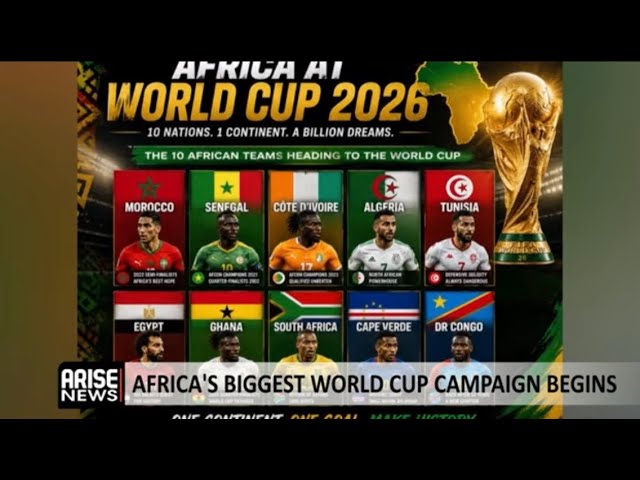
Now, let’s look at the real story. The 2026 World Cup, co-hosted by the United States, Canada, and Mexico, will feature 48 teams, with Africa receiving a record 9 or 10 slots. This expansion is a game-changer. As ESPN's analysis of "six FIFA World Cup-defining group-stage fixtures for African teams" highlights, the new format should fundamentally alter how African teams approach qualification. Instead of fighting tooth and nail for one of five spots, nations like Senegal, Nigeria, Egypt, and Ghana will have a much wider path to the knockout rounds. More teams in the tournament means more experience, more exposure to high-pressure matches, and more opportunities for a dark horse to emerge.
The 2026 Opportunity: A Golden Generation on the Horizon
Can an African team win the 2026 World Cup? The Africanews Debates posed this exact question, and the answer is cautiously optimistic. The 2026 tournament is almost certainly too early for a full-blown title charge, but it is the perfect staging ground for the 2030 assault. Why? Because the current crop of African talent is staggering. Think about the names: Victor Osimhen (Nigeria), the most prolific striker in Serie A history at Napoli. Mohamed Salah (Egypt), a Liverpool legend who redefined consistency. Achraf Hakimi (Morocco), arguably the best right-back in world football. Sadio Mané (Senegal), a Champions League winner and Ballon d'Or finalist. These are not just good players; they are world-class operators at the peak of their powers.
The problem has never been talent. It has been infrastructure, coaching continuity, and the psychological burden of expectation. African teams have historically crumbled under the weight of their own potential. Think of Nigeria's 2018 squad, a team of superstars that failed to advance past the round of 16. Think of Ghana's 2010 semi-final heartbreak against Uruguay, a penalty miss that still haunts the continent. The scars are deep, but Morocco's 2022 run has begun to heal them. They showed that an African team can not only compete but dominate against European giants. They showed that the "African mentality" is not a weakness; it is a weapon of resilience.
For 2026, the realistic goal should be a quarter-final or semi-final appearance. If Nigeria gets a favorable draw and Osimhen is in red-hot form, they could replicate Morocco's feat. Senegal, with Mané leading the line, has the defensive solidity and counter-attacking speed to trouble any side. But the trophy? That is a 2030 conversation. The expanded 48-team format will give African teams more matches against top-tier opposition, accelerating their tactical evolution. By 2030, the current U-17 and U-20 stars - players like Endrick's generation in Brazil, but with African equivalent - will be entering their prime. The continent is planting seeds that will bear fruit in a decade.
The Tactical Revolution: From Chaos to Control
One of the most overlooked aspects of African football's rise is the tactical revolution happening at the grassroots level. For years, African teams were stereotyped as chaotic, overly reliant on individual brilliance, and tactically naive. That stereotype is dying. Coaches like Aliou Cissé (Senegal), Regragui (Morocco), and even the underrated Tom Saintfiet (Gambia) have introduced structured, modern systems that prioritize defensive organization and transitional speed. The rise of African players in Europe's top leagues - especially in the Premier League, La Liga, and Serie A - has accelerated this shift. Players are returning to their national teams with a deep understanding of positional play, pressing triggers, and set-piece routines.
Consider the data. In the 2022 World Cup, African teams conceded fewer goals per game than in any previous tournament. Morocco's defensive record was the best of any team in the competition, including France and Argentina. This is not an anomaly. It is a trend. As more African players train under elite European coaches, the tactical gap narrows. The next step is developing homegrown coaches who can implement these systems at the national level without the cultural disconnect that sometimes plagues foreign managers. This is where federations must invest: in coaching education, youth academies, and scouting networks that identify talent early.
But here is the harsh reality: infrastructure remains the continent's Achilles' heel. The contrast between Morocco's state-of-the-art Mohammed VI Football Academy and the crumbling pitches in parts of West Africa is stark. The 2026 World Cup expansion provides a financial windfall for federations, but only if the money is spent wisely. Too often, African football has been plagued by corruption, mismanagement, and short-term thinking. The CAF must enforce transparency and accountability. If federations can build proper training facilities, hire competent technical directors, and create competitive domestic leagues, the talent pipeline will produce a World Cup winner within two decades.
The Psychological Barrier: Breaking the Final Wall
The most formidable opponent for any African team is not Brazil or France. It is the history of failure. The weight of expectation. The fear of being the one to let the continent down. Morocco overcame this by embracing a siege mentality. They played with a freedom and joy that was infectious. They did not fear Spain's tiki-taka or Portugal's star power. They believed they belonged, and that belief became a self-fulfilling prophecy.
This psychological shift is replicable. African players are now more mentally resilient due to their exposure to high-pressure environments in Europe. Osimhen thrives under the scrutiny of the San Paolo. Salah has handled the weight of Liverpool's expectations for years. Mané won a Champions League final. The next step is translating that club-level composure to the international stage. The 2026 World Cup will be a massive test. If an African team can reach the semi-finals again, the psychological barrier will shatter completely. The question will no longer be "if" but "when."
For the East African audience, the dream is particularly poignant. Kenya, Uganda, Tanzania, and Ethiopia have long been on the periphery of the continent's football powerhouses. But the 2026 expansion offers a lifeline. With proper development, East Africa could produce its
