Introduction
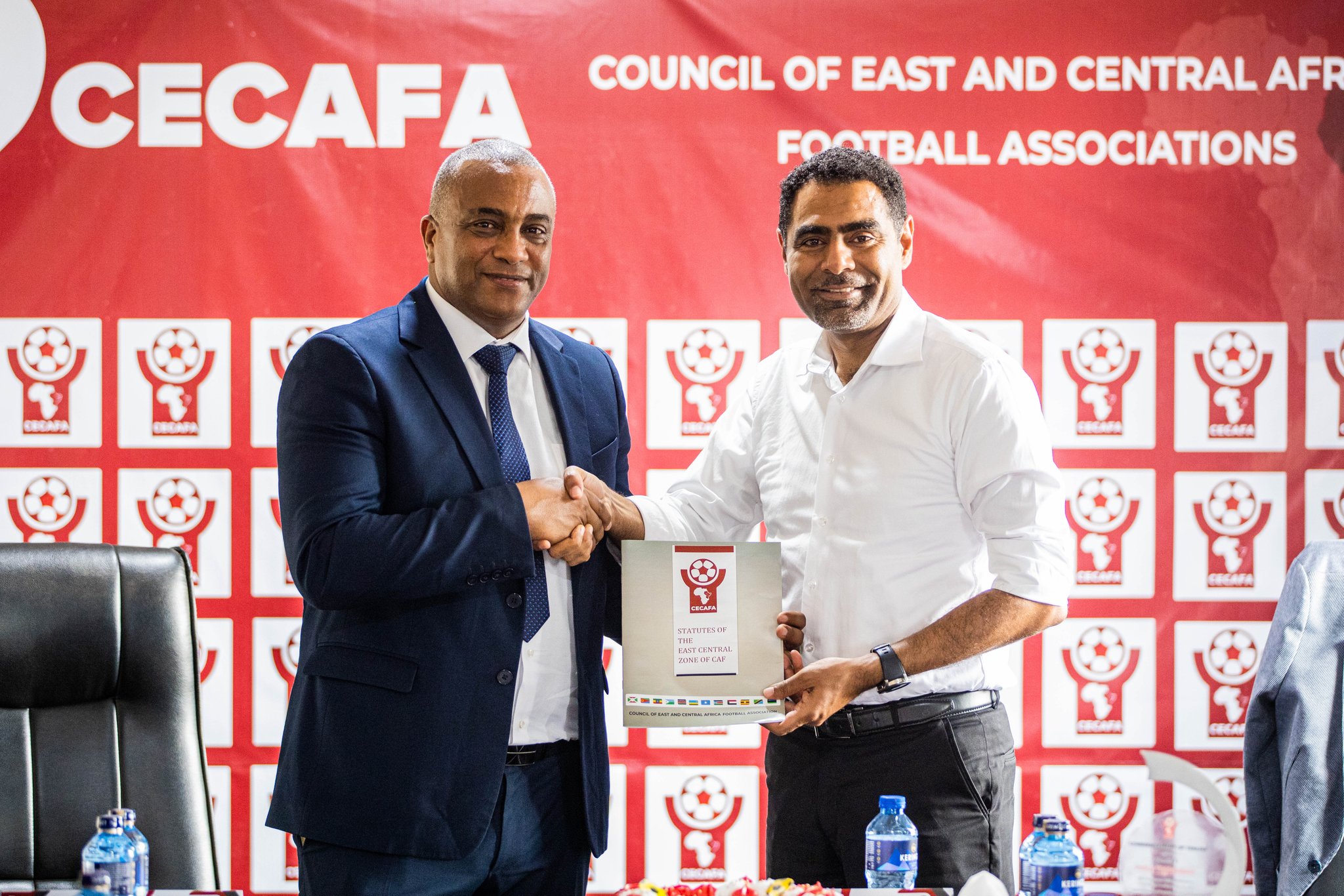
The presence of CECAFA President Paulos Weldehaimanot Andemariam at the Somali Football Federation General Assembly 2026 marks a pivotal moment for football development in the region. As the newly elected head of the Council of East and Central Africa Football Associations, Andemariam’s visit underscores a commitment to fostering tactical coherence across member associations. With Somalia seeking to rebuild its football infrastructure, this engagement signals a strategic shift towards unified playing philosophies and competitive structures. The assembly, held in Mogadishu, provided a platform to discuss how CECAFA’s seven-tournament calendar for 2026 can serve as a crucible for tactical evolution—particularly in pressing systems and transitional play.
In Possession: Building from the Back
Andemariam’s vision emphasises possession-based football, a hallmark of modern tactical systems. During the assembly, he highlighted the need for Somali clubs and the national team to adopt structured build-up play, drawing from CECAFA’s technical guidelines. This approach involves numerical superiority in the first phase, with full-backs dropping to form a back-three or back-four, and midfielders creating diamond shapes to bypass pressure. For Somalia, a nation historically reliant on counter-attacking, this represents a fundamental shift. The CECAFA President’s advocacy for such systems is rooted in the success of regional powerhouses like Kenya and Uganda, who have integrated these principles. External Link: CECAFA line-up seven tournaments for 2026 season provides the competitive framework for testing these tactics.
Out of Possession: Pressing Triggers and Compactness
Defensively, Andemariam stressed the importance of coordinated pressing triggers. In his address, he referenced the need for Somali teams to develop a compact block—either a mid-block or high press—depending on the opponent. The tactical blueprint involves triggering pressure when the ball is played into wide areas or when a pass is underhit. This requires intense fitness and communication, areas where CECAFA’s coaching courses aim to improve. The President’s visit also touched on the role of zonal marking versus man-to-man in set pieces, a common weakness for developing nations. By aligning with CECAFA’s technical department, Somalia can access resources to drill these patterns. External Link: New CECAFA President Andemariam assumes office in Nairobi details his administrative priorities.
Transition: Exploiting Spaces
Andemariam’s tactical philosophy prioritises quick transitions—both offensive and defensive. In possession, he advocates for immediate vertical passes to exploit spaces left by pressing opponents. For Somalia, this means training wingers to make early runs behind full-backs, a tactic that could elevate their goal threat. Defensively, the emphasis is on immediate counter-pressing to regain shape. The CECAFA President’s visit to the Somali assembly included workshops on transition drills, using data from the upcoming CECAFA Elective General Assembly in Djibouti as a benchmark for progress. These tactical shifts are designed to make Somali football more competitive in regional tournaments.
Conclusion
Paulos Weldehaimanot Andemariam’s presence at the Somali Football Federation General Assembly 2026 is more than a diplomatic gesture—it is a tactical intervention. By championing possession-based systems, structured pressing, and rapid transitions, he aims to elevate the entire region’s footballing standard. For Somalia, the path forward involves embracing these principles through CECAFA’s technical support and tournament exposure. As the region prepares for a busy 2026 season, the seeds of tactical unity have been sown. For deeper analysis of such tactical shifts, explore SokaFundi’s tactical breakdowns to understand how regional football evolves.
This article is based on verified reports from CECAFA and Africa Top Sports.
