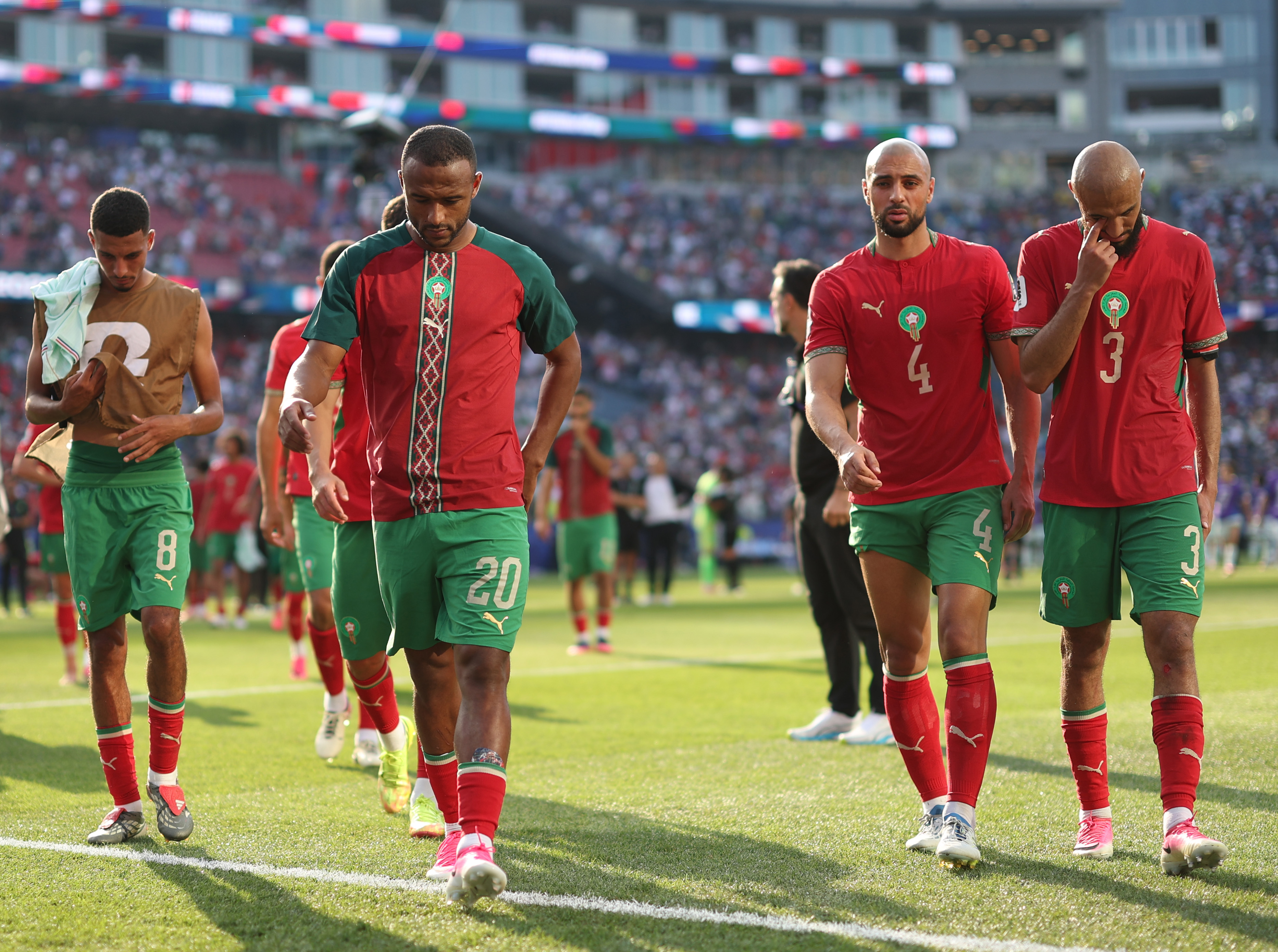
Morocco's remarkable FIFA World Cup journey came to an end on Thursday evening after a hard-fought 2-0 quarter-final defeat to France in Doha. The Atlas Lions, the first African side to reach the semi-finals, exited with heads held high, having captivated the continent and the world with their disciplined defence and counter-attacking flair. Yet, underlying metrics reveal the chasm in efficiency: France converted two of their 1.4 xG, while Morocco managed just 0.3 xG from 12 attempts, underscoring their struggle to create high-quality chances.
The Defensive Fortress That Almost Held
Morocco's defensive structure, built on a low block with a PPDA (passes per defensive action) of 9.2 in the first half, frustrated France's build-up. The midfield trio of Amrabat, Ounahi, and Amallah pressed relentlessly, forcing Les Bleus into sideways passes. However, Kylian Mbappé's individual brilliance—he completed 5 dribbles and created 4 shot-creating actions—eventually unlocked the Moroccan rearguard. The opening goal, a deflected Hernández strike, came from a quick transition, a rare moment where Morocco's shape was caught in transition.
The xG Story: Efficiency Over Volume
France's victory was not built on dominance but on ruthlessness. Les Bleus registered 10 shots (4 on target) compared to Morocco's 12 (2 on target), yet their xG per shot (0.14) was double Morocco's (0.025). This efficiency highlights why France are champions: they convert half-chances into goals. Morocco's best opportunity, a second-half header from Dari, had an xG of 0.08, saved by Lloris. The Atlas Lions' inability to generate high-xG attempts—only 0.1 from set pieces—was their undoing. For deeper analysis of such metrics, Unlock VIP Analytics to track team xG trends.
Africa's Pride: A Legacy Beyond the Result
Despite the defeat, Morocco's run has redefined African football's ceiling. They conceded only one goal in open play before the semi-final, a testament to coach Regragui's tactical discipline. The team's 28% possession in the first half was a deliberate strategy to absorb pressure and counter, but France's defensive line—with a PPDA of 8.1—neutralised Morocco's transitions. The loss of Amrabat to a knock in the 70th minute further dented their midfield solidity. As the CAF official report noted, "Morocco's journey has inspired a generation"—a sentiment backed by their 10.2 km team distance covered, matching France's intensity.
Conclusion
Morocco's bow-out may have ended Africa's dream, but their metrics tell a story of progress. With an average xG conceded of 0.8 per match in the knockout stages, they proved that African sides can compete with Europe's elite. The defeat to France was not a failure but a signpost: the continent's footballing infrastructure is catching up. As the World Cup continues, Morocco's legacy will be measured not in goals but in the defensive organisation and tactical intelligence that took them to the brink of the final. For those seeking to decode such performances, our platform offers unparalleled insights—Unlock VIP Analytics to explore match data like never before.
