The CECAFA U-17 Women’s Championship: Arrival, Tactical Evolution, and the Quest for Regional Supremacy
The CECAFA U-17 Women’s Championship has descended upon Dar es Salaam, Tanzania, with a palpable sense of purpose. As teams from Somalia, South Sudan, and other CECAFA nations touch down, the tournament is not merely a collection of youth matches but a crucible for tactical innovation and long-term player development. The opening day’s results, particularly Kenya’s staggering 16-goal victory over Sudan, have already sent shockwaves through the region, forcing analysts to recalibrate their expectations.
The Arrival: A Gathering of Talent in Dar es Salaam
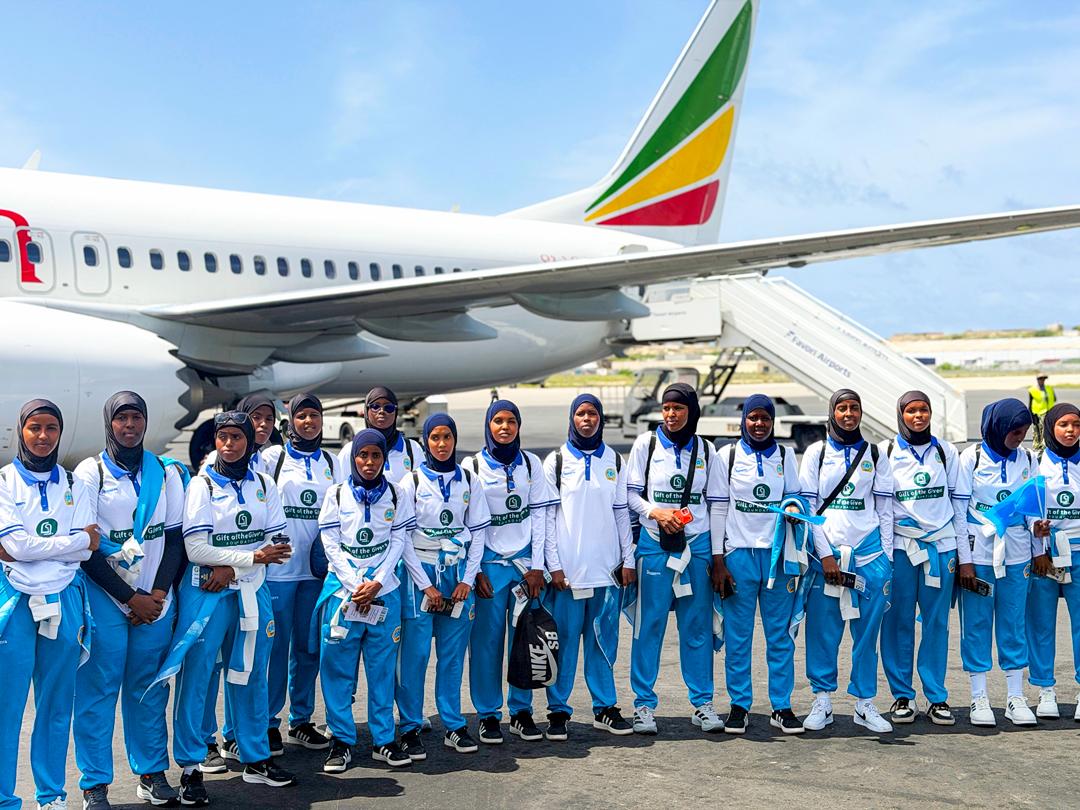
The logistical symphony of teams arriving in Tanzania is the first tactical move of the tournament. South Sudan, Somalia, and others have landed, each carrying the weight of their nation’s footballing aspirations. The choice of Dar es Salaam as the host city is strategic: its humid coastal climate and artificial turf pitches demand specific physical and technical adaptations. Teams that arrived early have an advantage in acclimatization, a subtle but critical edge in a tournament where margins are razor-thin. Uganda’s U-17 women’s team, drawn in Group B alongside South Sudan, Zanzibar, and Djibouti, has been particularly vocal about their readiness, with their coaching staff emphasizing set-piece routines and high-pressing triggers during pre-tournament camps.
Kenya’s Tactical Masterclass: The 16-Goal Statement
Kenya’s Junior Starlets, under the astute guidance of head coach Mildred Cheche, delivered a performance that transcended mere victory. The 16-0 scoreline against Sudan was a clinic in positional play and vertical progression. Cheche, who made four changes to her squad before the tournament, has implemented a 4-3-3 formation that morphs into a 2-3-5 in possession, overwhelming opponents with numerical superiority in the final third. The midfield pivot, anchored by a deep-lying playmaker, consistently broke Sudanese lines with incisive through balls, while the wide forwards exploited the half-spaces with devastating efficiency.
#### The Tactical Blueprint: How Kenya Overwhelmed Sudan
Mildred Cheche: The Architect Behind the Revolution
Coach Cheche’s decision to retain the core of her squad while introducing four tactical specialists reflects a long-term vision. Her background in sports science and data analysis has infused the Junior Starlets with a modern, metrics-driven approach. In a recent interview, she emphasized the importance of “spatial intelligence” and “decision-making under pressure,” concepts often reserved for senior national teams. Her squad selection prioritizes players who can play multiple positions, a flexibility that allows in-game tactical shifts without substitutions.
Group B Dynamics: Uganda’s Path to Glory
Uganda’s U-17 team, drawn in Group B, faces a different set of challenges. Their opener against South Sudan will test their ability to break down a physically robust defense. The Ugandan coaching staff has focused on transitional moments, training their players to exploit the space left by opponents’ fullbacks. Zanzibar and Djibouti, while less fancied, cannot be underestimated; both have invested in youth academies that emphasize technical proficiency over physicality.
The Broader Implications: A Tournament for the Future
This championship is more than a trophy hunt. It is a litmus test for the region’s investment in women’s football development. The tactical sophistication on display, from Kenya’s fluid attack to Uganda’s structured defense, suggests that CECAFA nations are closing the gap with traditional powerhouses like Nigeria and South Africa. The tournament also serves as a scouting ground for continental clubs and national team selectors, with several players expected to earn call-ups to senior squads.
Tactical Trends to Watch
The Role of Data and Analytics
Modern youth tournaments are increasingly data-driven. Coaches now use GPS trackers and video analysis to monitor player loads and tactical compliance. For fans seeking deeper insights, platforms like SokaFundi offer comprehensive statistical breakdowns and tactical diagrams. Unlock VIP Bundles to access exclusive xG models and player heat maps that reveal the hidden patterns behind every goal.
Key Takeaways
- Kenya’s 16-goal victory against Sudan is a tactical statement, highlighting their high-press and fluid attacking patterns under coach Mildred Cheche.
- Uganda’s readiness in Group B, with emphasis on transitions and set pieces, positions them as a strong contender.
- The tournament is a crucial development platform for CECAFA women’s football, with potential to elevate regional standards.
- Data analytics and tactical flexibility are becoming decisive factors in youth competitions.
- Early arrival and acclimatization in Dar es Salaam provide a subtle but important competitive edge.
