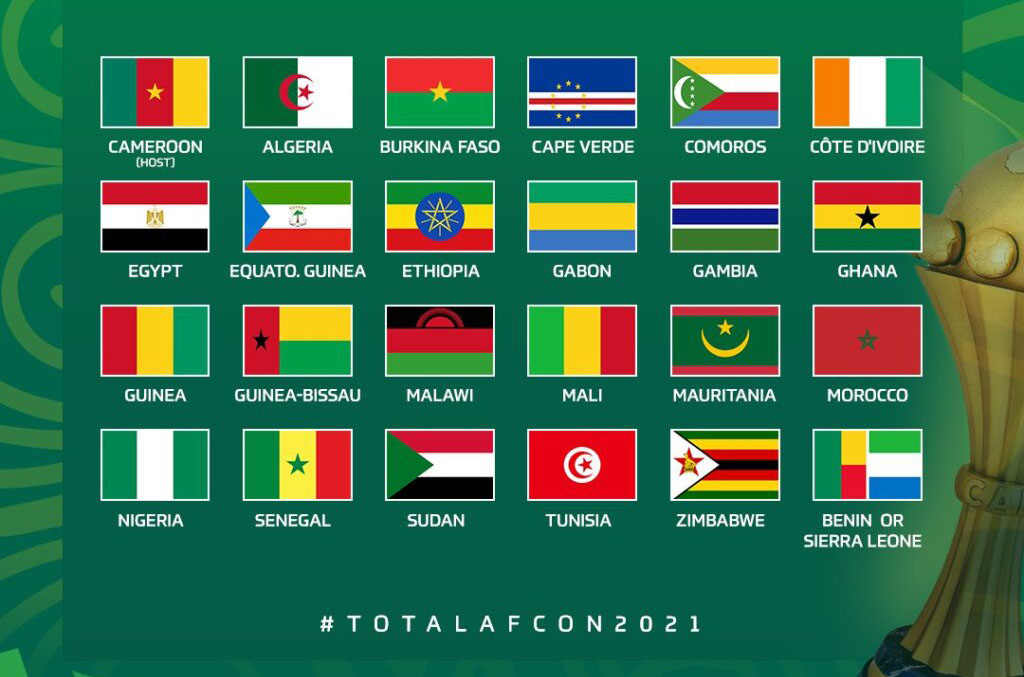
In the grand theatre of African football, few moments carry the weight of anticipation as the drawing of lots for the continent's premier tournament. For the faithful of Ethiopia and Sudan, the coming weeks herald a period of nervous excitement, as their national teams prepare to learn their fate for the TotalEnergies Africa Cup of Nations (AFCON) 2021. The draw, scheduled for August 17th, 2021, in Yaoundé, Cameroon, will determine the group-stage opponents for the two East African stalwarts, setting the stage for a campaign steeped in history and hope.
The Road to Cameroon
The journey to this point has been arduous, a testament to the resilience of both nations. Ethiopia, the 'Walyas', have qualified for their first AFCON since 2013, while Sudan, the 'Desert Hawks', return to the fold after a lengthy absence. Their qualification, achieved through the rigorous qualifying rounds, has rekindled the dreams of millions. As the CECAFA Online reported, "Ethiopia and Sudan will know their TotalEnergies Africa Cup of Nations (AFCON) group opponents on August 17th, 2021 when the draw is conducted" (CECAFA Online, 2021). This moment, long awaited, is now within sight.
A Date with Destiny: The Draw
The draw ceremony, a spectacle in itself, will see the 24 qualified nations placed into six groups of four. The seeding, based on the latest FIFA rankings, will place the hosts Cameroon, along with the continent's heavyweights, as top seeds. For Ethiopia and Sudan, the prospect of facing the likes of Algeria, Senegal, or Nigeria looms large, yet it is a challenge they embrace. The draw will not only shape their immediate path but also define their narrative in the tournament. As the CECAFA Online noted, "The Council of East and Central African Football Associations (CECAFA) flag bearers Ethiopia and Sudan will know their opponents for the..." (CECAFA Online, 2021). The suspense is palpable.
Historical Echoes and Modern Aspirations
Football in this region is not merely a game; it is a heritage. Ethiopia, the pioneers of African football, hosted and won the inaugural AFCON in 1962, a feat that remains etched in the annals of the sport. Sudan, too, have their glory days, having claimed the title in 1970. These historical triumphs serve as a reminder of the potential that lies dormant in these footballing nations. As they prepare for the draw, they carry the weight of their past, yet their eyes are fixed firmly on the future. The qualification for AFCON 2021 is not just a participation; it is a statement of resurgence.
The Tactical Landscape
The modern AFCON is a crucible of tactical innovation and physical intensity. For Ethiopia, under the guidance of their coach, the emphasis has been on a compact defensive structure and rapid counter-attacks, utilising the pace of their forwards. Sudan, on the other hand, have shown a preference for possession-based football, patiently building from the back. The draw will determine the style of opposition they will face, and their adaptability will be key. The group stage matches will be a test of not only skill but also mental fortitude, as the heat of Cameroon and the fervour of the crowds add to the challenge.
The Broader CECAFA Context
The fortunes of Ethiopia and Sudan are intertwined with the broader narrative of East and Central African football. The CECAFA region has often been perceived as an underdog in continental competitions, yet these two nations have consistently punched above their weight. Their participation in AFCON 2021 is a source of pride for the region, and their performances will be closely watched by their neighbours. As the CECAFA President, Wallace Karia, engages with CAF President Dr. Patrice Motsepe in Kigali (CECAFA Online, 2021), there is a sense that the region is seeking a greater voice in the governance of African football. The success of Ethiopia and Sudan on the pitch could well translate into influence off it.
The Draw's Implications
For the players, the draw is a moment of personal significance. Many of them have spent their careers dreaming of this stage, and the identity of their opponents will shape their preparations. A group with a so-called 'weaker' team might offer a more straightforward path, but in the AFCON, there are no easy games. The tournament has a history of upsets, and the so-called minnows have often risen to the occasion. Ethiopia and Sudan will be aware that their fate is not solely determined by the draw, but by their own performances on the day.
Conclusion
As the date of the draw approaches, the excitement builds. For Ethiopia and Sudan, this is more than just a draw; it is a celebration of their footballing heritage and a beacon of hope for the future. The road to Cameroon has been long, but the journey is far from over. The draw on August 17th will set the stage for what promises to be a memorable AFCON, and the two CECAFA representatives will be determined to leave their mark. In the words of the great Nelson Mandela, "Sport has the power to change the world," and for these two nations, the beautiful game is once again a source of unity and pride. As they await their opponents, the faithful can only hope that their teams will rise to the occasion and write a new chapter in their storied histories.
For those keen to delve deeper into the tactical nuances and historical context of African football, SokaFundi offers a treasure trove of analysis and insights. Explore more to enhance your understanding of the game's rich tapestry. The draw is but a prelude; the real drama unfolds on the pitch.
