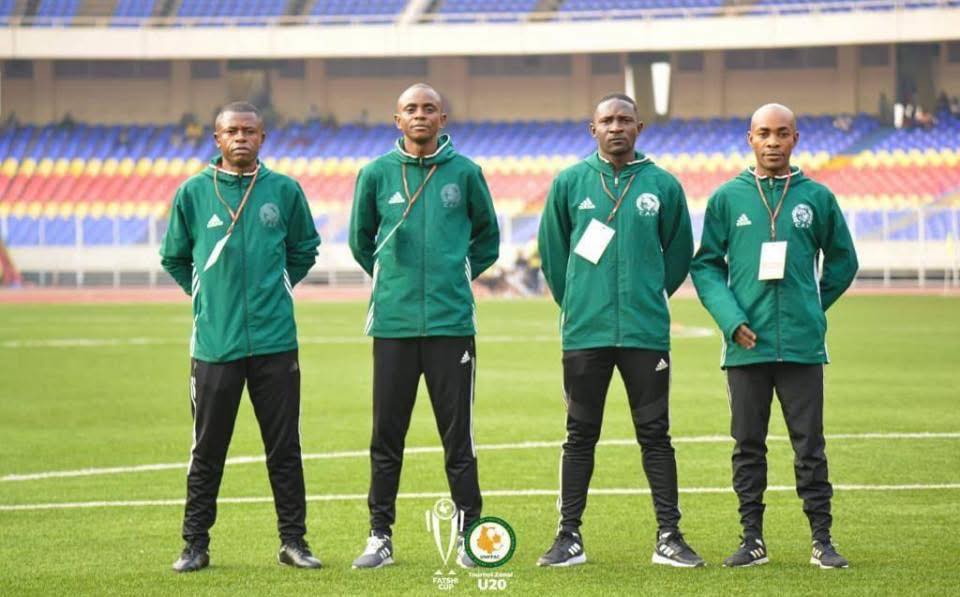
In the annals of African football, the whistle has often been a symbol of authority and, at times, contention. Yet, as the Central African Football Federations' Union (UNIFFAC) launches a FIFA referees capacity-building course in Douala, Cameroon, a new chapter unfolds—one that promises to refine the art of officiating across the region. This initiative, drawing thirty-one male and female referees and assistant referees from eight member associations, is not merely a training session; it is a testament to football's enduring romance with fairness and precision. As the beautiful game evolves, so too must its guardians, and UNIFFAC's commitment to this cause mirrors the historic strides taken by football's governing bodies to standardise excellence.
The Crucible of Officiating
The course in Douala represents a crucible where raw talent is tempered into judicial acumen. Participants, hailing from diverse footballing cultures, engage in rigorous theoretical and practical sessions designed to align with FIFA's latest directives. The emphasis on uniformity in decision-making—particularly in offside calls, foul recognition, and game management—echoes the broader global push for consistency. As one participant noted, > "This is not just about learning the rules; it is about understanding the spirit of the game." Such sentiment underscores the shift from mere rule enforcement to holistic game stewardship, a philosophy that has long defined football's highest echelons.
A Legacy of Development
UNIFFAC's initiative is part of a larger tapestry of capacity-building efforts across Africa. For decades, the continent has grappled with officiating controversies, often overshadowing on-field brilliance. However, courses like this, supported by FIFA's Technical Development Programme, aim to rewrite that narrative. By investing in referees, UNIFFAC acknowledges that the game's integrity rests on the shoulders of those who enforce its laws. This course, with its blend of classroom instruction and on-pitch drills, mirrors the methodologies used in elite European leagues, offering a pathway for African referees to ascend to international assignments. For a deeper dive into football's developmental strategies, explore this analysis of referee training.
The Human Element
Beyond the technicalities, the course celebrates the human element of officiating. The inclusion of both male and female referees highlights a progressive approach, recognising that diversity strengthens the game. The camaraderie among participants, despite linguistic and cultural differences, reflects football's unifying power. As one assistant referee remarked, > "We share a common language—the language of the whistle." This sentiment encapsulates the romance of football: a sport where boundaries dissolve in pursuit of a shared passion. For those seeking to refine their own understanding of the game, SokaFundi offers unparalleled insights into tactical analysis and referee decisions, empowering fans and professionals alike.
Conclusion
As the course concludes in Douala, its impact will ripple far beyond the training grounds. These referees return to their home associations as ambassadors of a new officiating ethos—one rooted in knowledge, fairness, and respect. UNIFFAC's investment in capacity-building is a beacon for the continent, signalling that football's future depends on the calibre of its guardians. In the grand theatre of African football, the referee's whistle may yet become the most cherished instrument of all, ensuring that the beautiful game remains just that—beautiful.
