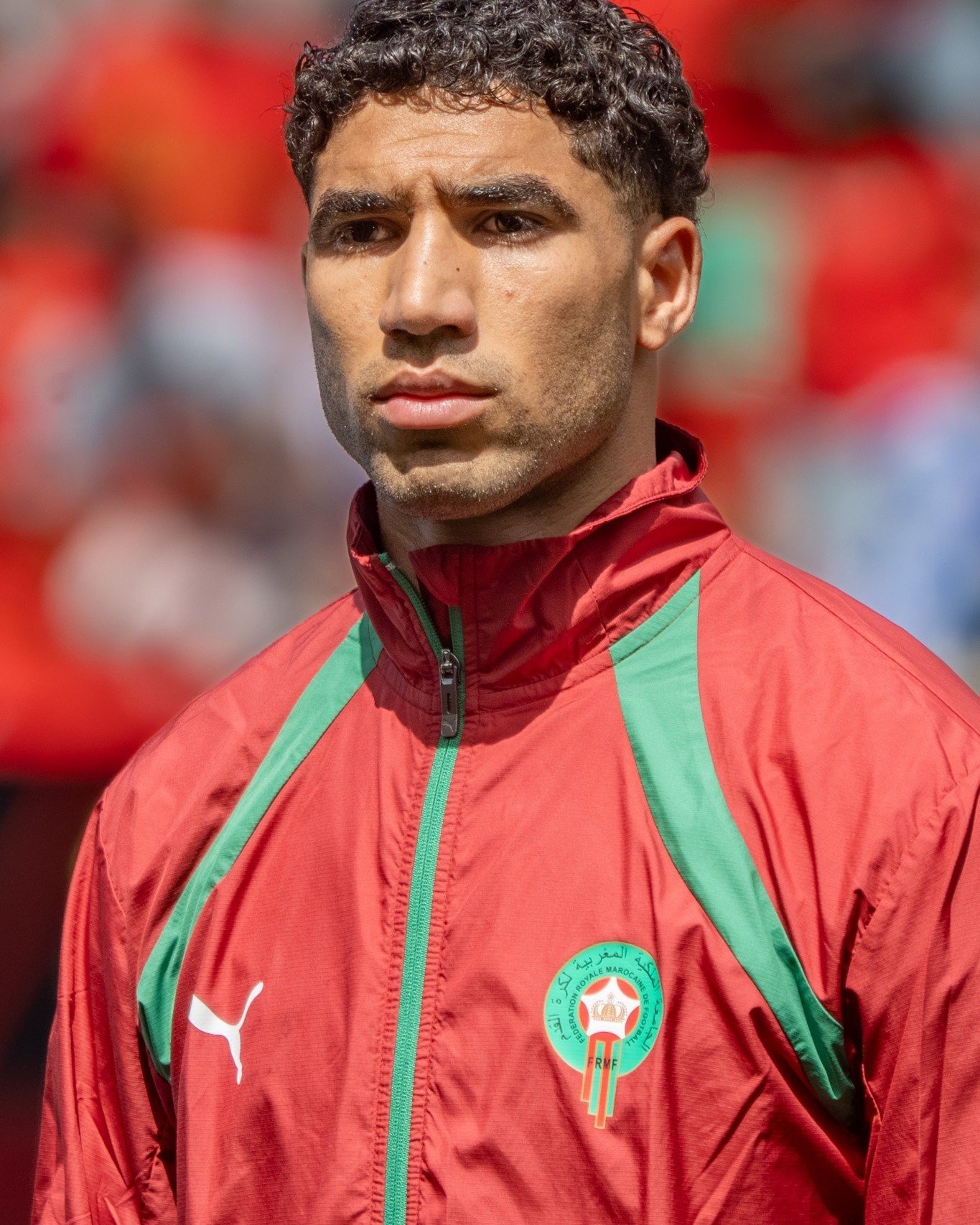
In a landmark achievement for African football, Morocco captain Achraf Hakimi has been officially congratulated by the Confederation of African Football (CAF) after setting a new record for the most World Cup appearances by an African player. The Paris Saint-Germain full-back, already crowned 2025 African Player of the Year, has become the face of a tactical revolution that saw Morocco become the first African side to reach the World Cup semi-finals in Qatar 2022. Hakimi's record underscores not just individual brilliance, but the systematic evolution of African football under manager Walid Regragui's disciplined 4-3-3 shape.
In Possession: The Attacking Full-Back as Playmaker
Hakimi's record stems from his unique dual role as both a defensive stalwart and an offensive catalyst. In Morocco's 4-3-3, he pushes high on the right flank, often forming a 2-4-4 attacking structure. His intelligent overlapping runs create numerical superiority against opposing full-backs, forcing defences to shift. This tactical flexibility—switching between a traditional right-back and a winger—has been pivotal. As CAF noted, Hakimi's 23 World Cup appearances surpass previous records, with his crossing accuracy and key passes per game ranking among the tournament's elite. His ability to deliver early crosses from deep positions, combined with a keen eye for cut-backs, has made him a nightmare for defenders.
Out of Possession: The Pressing Trigger
Defensively, Hakimi's tactical discipline is equally crucial. He operates as the primary pressing trigger in Morocco's mid-block, initiating high-intensity closing down when the opposition full-back receives. His recovery pace allows him to cover the channel between centre-back and full-back, a vital component of Regragui's compact 4-4-2 defensive shape. This dual-phase contribution—averaging 3.2 tackles and 2.1 interceptions per World Cup game—has been instrumental in Morocco's clean-sheet record. As CAF hails Hakimi, his record is a testament to modern full-back evolution.
The Tactical Blueprint: Morocco's 4-3-3 Evolution
Regragui's system relies on Hakimi's ability to transition from defence to attack instantly. In build-up, he drops into a back-three, allowing the right winger to tuck inside. This creates a 3-4-3 shape that overloads midfield. Hakimi's passing range—especially his diagonal switches to the left—stretches opposition blocks, a tactic seen in Morocco's historic semi-final run. His record-breaking appearances coincide with a broader African tactical maturity, with CAF president Motsepe believing an African team can win the 2026 World Cup. For deeper tactical insights, check out SokaFundi's analysis tools.
Conclusion
Achraf Hakimi's new World Cup appearance record for Africa is more than a personal milestone; it reflects a tactical paradigm shift. His role as an inverted full-back, pressing trigger, and creative outlet embodies the modern game's demands. As African football continues to evolve, Hakimi's blueprint—blending defensive solidity with offensive flair—offers a template for future generations. With the 2026 World Cup on the horizon, his record may soon be broken, but his tactical legacy will endure.
