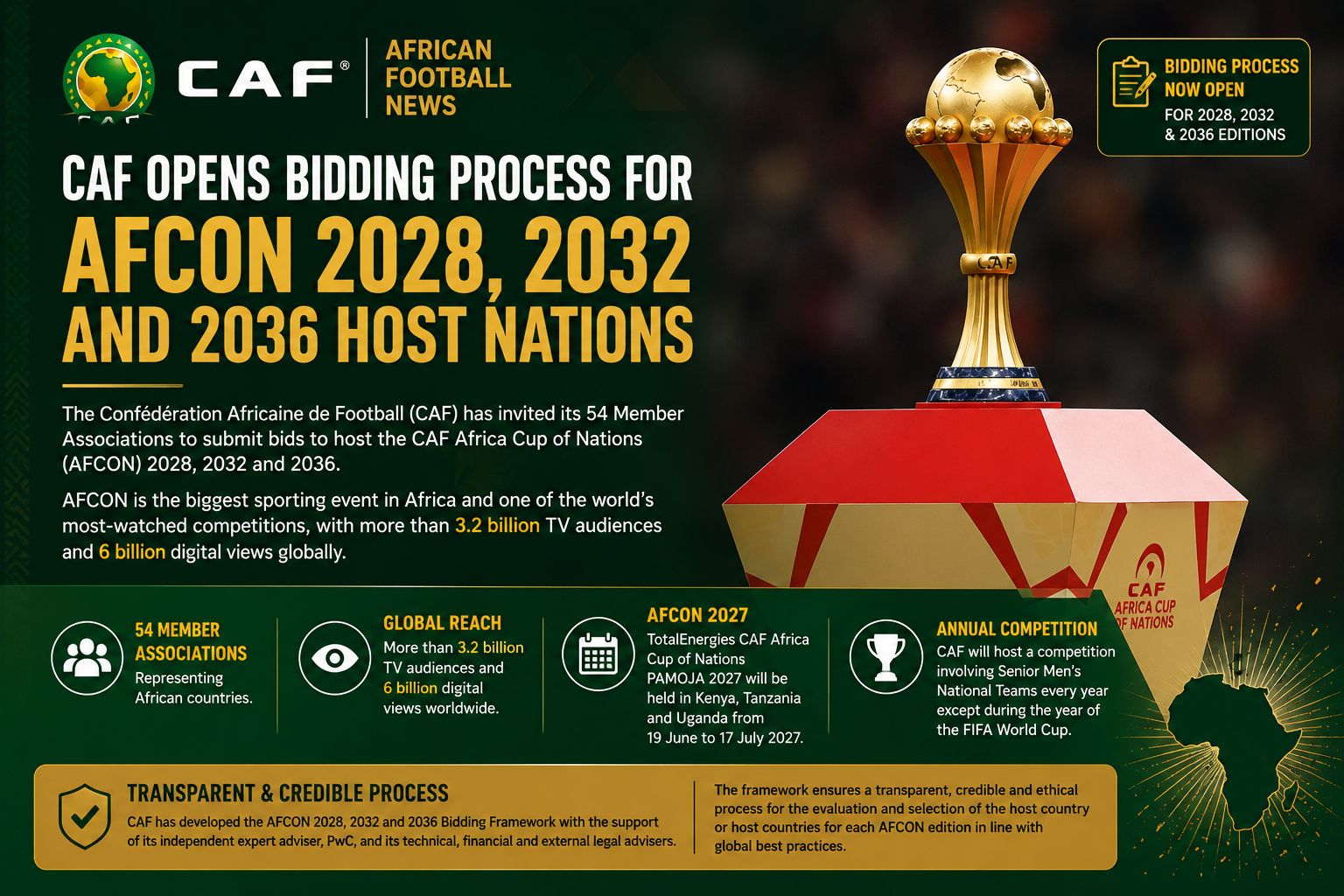
The Confederation of African Football (CAF) has officially invited its 54 member associations to submit bids to host the Africa Cup of Nations (AFCON) in 2028, 2032, and 2036. This unprecedented move, announced via a formal call for bids, marks a strategic shift towards long-term tournament planning and financial sustainability. For African football, this is not merely a sporting event—it is a multi-billion-dollar business opportunity that demands rigorous financial scrutiny and investment.
The Financial Framework of AFCON Bids
Hosting an AFCON tournament requires significant capital outlay. According to CAF's bidding guidelines, prospective hosts must demonstrate robust financial guarantees, including stadium infrastructure, transport networks, and security provisions. The cost of hosting can range from $100 million to over $1 billion, depending on existing facilities. For instance, the 2019 AFCON in Egypt cost an estimated $600 million, while the 2021 edition in Cameroon exceeded $1 billion. These figures highlight the need for member associations to present viable financial plans, often involving government backing and private investment.
Amortisation and Long-Term Value
CAF's decision to offer three consecutive tournaments allows hosts to amortise infrastructure costs over a longer period. By bidding for 2028, 2032, or 2036, nations can spread expenses across multiple years, reducing immediate financial pressure. This approach aligns with modern football economics, where stadiums and training facilities serve as long-term assets. For example, the 2010 World Cup in South Africa generated lasting economic benefits through tourism and job creation. Similarly, AFCON hosts can leverage these tournaments to boost their football economies.
Financial Fair Play and Wage Structures
While CAF does not enforce UEFA-style Financial Fair Play (FFP), the bidding process implicitly requires fiscal discipline. Host nations must ensure that tournament spending does not destabilise domestic leagues or inflate player wages. In some African countries, hosting has led to increased investment in football, but also to unsustainable wage structures. For instance, the 2023 AFCON in Ivory Coast saw local clubs struggle to retain players due to higher salaries offered by temporary tournament-related projects. Bidders must balance short-term gains with long-term financial health.
Strategic Marketing and Commercial Rights
CAF's bidding process also emphasises commercial rights and marketing potential. Host nations can negotiate broadcasting deals, sponsorship agreements, and merchandise sales, which can offset costs. The 2021 AFCON generated over $100 million in revenue, with broadcast rights accounting for a significant share. For deeper insights into football finance, check out this analysis on SokaFundi. Additionally, CAF's partnership with global brands like TotalEnergies underscores the tournament's commercial appeal.
Conclusion
CAF's invitation for bids for AFCON 2028, 2032, and 2036 represents a landmark in African football governance. By prioritising long-term planning and financial transparency, the organisation aims to attract credible bidders who can deliver sustainable tournaments. The ultimate verdict will depend on whether member associations can present viable financial models that balance investment with economic stability. For African football, this is a chance to build a legacy that transcends the pitch.
