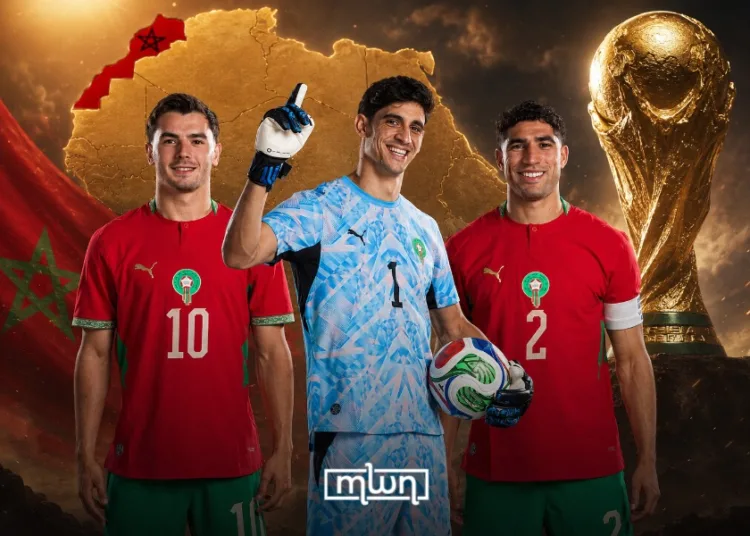
The echoes of the Atlas Lions’ roar have yet to fade. When Morocco became the first African nation to reach a World Cup semi-final in 2022, they did not merely break a barrier; they shattered a ceiling of perception. Now, as the 2026 tournament unfolds, CAF has once again commended Morocco’s performance, this time against Haiti in the group stage, noting that the team’s resilience continues to elevate African football on the global stage. This is not merely a story of one nation’s success; it is a narrative of continental redemption, a testament to the growing technical and tactical sophistication of African football.
A Legacy Forged in Qatar
Morocco’s journey in Qatar 2022 was a masterclass in defensive organisation, collective spirit, and tactical discipline. They overcame Belgium, Spain, and Portugal, falling only to France in the semi-finals. That run was not a fluke; it was the culmination of years of investment in youth development and coaching infrastructure. The current squad, blending European-born talent with homegrown grit, embodies a new African identity—one that is no longer content with mere participation but demands respect and results. Scotland manager Steve Clarke, ahead of his side’s clash with Morocco, warned of the Atlas Lions’ rising strength, acknowledging the magnitude of the task. Such endorsements from European tacticians underscore the shift in power dynamics.
CAF’s Endorsement and the Continental Ripple
The Confederation of African Football (CAF) has been unequivocal in its praise. Following Morocco’s 2-0 victory over Haiti, a CAF statement highlighted how the team’s resilience “continues to elevate African football.” This is more than administrative cheerleading; it reflects a strategic vision. Morocco’s success has spurred increased investment across the continent, from grassroots programmes to professional leagues. The upcoming AFCON 2025, hosted by Morocco, will be a showcase of this progress. Yet, even as Morocco prepare to host, they were reminded of the competitiveness of African football when Senegal defeated them in extra time to claim the AFCON 2025 title. That defeat, far from diminishing Morocco’s stature, reinforced the depth of talent on the continent.
"“Morocco’s performance is a source of pride for all Africa,” a CAF spokesperson said. “They have shown that with determination and planning, African teams can compete with the world’s best.”"
The Tactical Blueprint
What sets Morocco apart is their tactical flexibility. Under coach Walid Regragui, they have adopted a pragmatic approach that prioritises defensive solidity without sacrificing attacking flair. The midfield axis of Sofyan Amrabat and Azzedine Ounahi provides both steel and creativity, while the full-backs, Achraf Hakimi and Noussair Mazraoui, offer relentless width. This system, which frustrated the likes of Luka Modric and Kevin De Bruyne, is now being studied by other African nations. The blueprint is clear: invest in a strong domestic league, nurture diaspora talent, and embrace modern analytics. For those seeking to understand the nuances of such tactics, SokaFundi’s analysis tools offer deep dives into formations and player performance metrics.
Conclusion
Morocco’s World Cup resilience is not an isolated phenomenon but a harbinger of African football’s golden age. As the continent prepares to host the 2030 World Cup alongside Spain and Portugal, the legacy of the Atlas Lions will serve as both inspiration and instruction. The road ahead is long, but the destination is clear: African football is no longer the underdog; it is a rising powerhouse. And as the world watches, Morocco continues to lead the charge, one resilient performance at a time.
