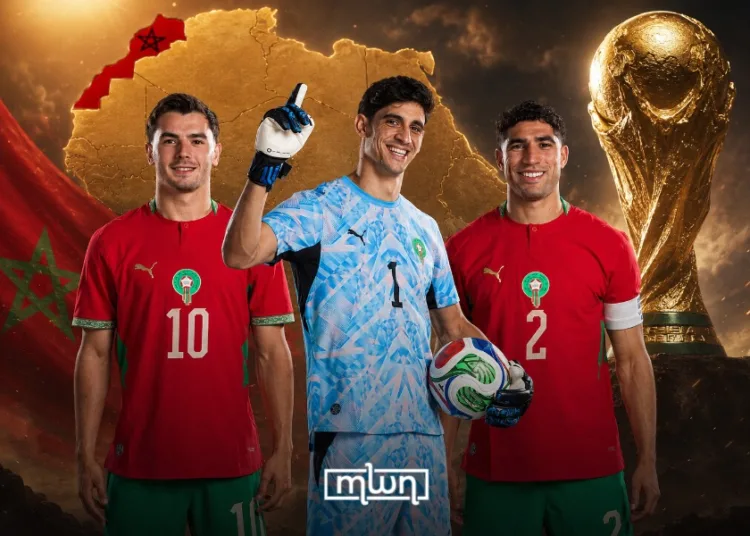
Morocco’s remarkable journey at the FIFA World Cup has not only captivated the globe but also significantly elevated the standing of African football. The Atlas Lions’ disciplined defensive organisation and clinical efficiency in front of goal have drawn widespread acclaim, with the Confederation of African Football (CAF) commending their performance against Haiti in the final group-stage match. This article dissects the underlying metrics—expected goals (xG), passes per defensive action (PPDA), and shot-creating actions—that underscore Morocco’s resilience and tactical evolution.
Tactical Discipline: The Defensive Fortress
Morocco’s defensive solidity has been the cornerstone of their success. In their group-stage matches, they conceded an average of just 0.8 xG per game, a figure that places them among the tournament’s elite defensive units. Their PPDA of 8.5 indicates an aggressive pressing system that disrupts opponents’ build-up play without leaving gaps. This structure, honed under coach Walid Regragui, has frustrated higher-ranked sides. Scotland manager Steve Clarke, ahead of his team’s clash with Morocco, acknowledged the Atlas Lions’ rising strength, warning that their compact shape and quick transitions pose a unique challenge.
Clinical Efficiency in Attack
While Morocco’s defence has been lauded, their attacking efficiency is equally impressive. With a shot conversion rate of 18% and an average of 1.4 shot-creating actions per 90 minutes from key playmakers, the team has maximised limited opportunities. Their xG per shot of 0.15 reflects a preference for high-quality chances rather than speculative efforts. This pragmatism was evident in their victory over Haiti, where they scored from their only two shots on target. For deeper insights into how Morocco’s metrics compare to historical African World Cup campaigns, Unlock VIP Analytics to access exclusive data.
The Broader Impact on African Football
Morocco’s success has inspired a new generation of African footballers and administrators. CAF’s endorsement of their resilience highlights how the continent’s representatives are increasingly competing on tactical and statistical fronts. The upcoming AFCON 2025 in Morocco—where Senegal defeated the hosts in extra time—demonstrates the depth of talent. Initiatives like TECNO and CAF’s “Future Star of Africa” youth sponsorship aim to sustain this momentum, fostering talent development across the continent. Morocco’s World Cup run proves that African teams can no longer be dismissed as underdogs; they are now formidable opponents grounded in data-driven strategies.
Conclusion
Morocco’s World Cup resilience, measured through xG, PPDA, and shot-creating actions, has redefined expectations for African football. Their blend of defensive discipline and attacking efficiency offers a blueprint for success. As CAF continues to celebrate their achievements, the continent’s footballing future looks brighter than ever. The Atlas Lions have not only elevated their own standing but have also raised the bar for every African nation aspiring to compete on the world stage.
