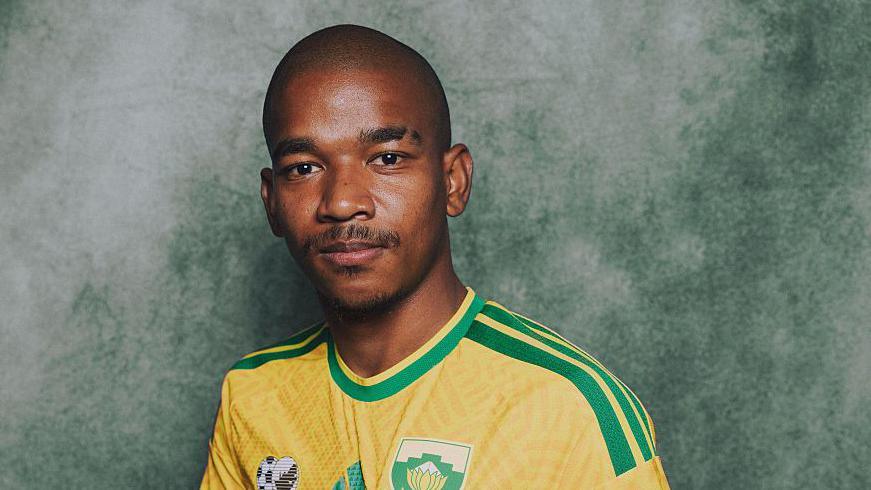
The football world was plunged into mourning this week as news broke of the passing of South Africa international Jayden Adams at the age of 25, just weeks after he featured in the World Cup. The midfielder, a linchpin in Bafana Bafana's recent tactical evolution, died under circumstances that remain undisclosed. His loss is not merely a personal tragedy but a profound tactical setback for a side that had begun to rely on his unique blend of positional discipline and creative incision.
Adams had become an integral component of coach Hugo Broos' system, operating as the advanced playmaker in a 4-2-3-1 shape that sought to blend defensive solidity with swift transitions. His ability to receive the ball between the lines and distribute with precision made him the team's primary conduit from defence to attack. At the time of his death, Broos was fine-tuning a midfield trio designed to maximise Adams' influence, pairing him with a ball-winning destroyer and a deep-lying orchestrator. The void left by Adams is not easily filled.
In Possession: The Hub of Creativity
When South Africa had the ball, Adams was the focal point of their attacking patterns. Stationed in the half-spaces, he would often drop deep to collect possession from the centre-backs, drawing opposition midfielders out of position. This created space for the full-backs to advance and for the wide attackers to cut inside. His passing range—capable of switching play to the opposite flank or threading through balls for the striker—gave Bafana Bafana a multifaceted threat. Without him, the team loses its primary source of creativity in central areas, forcing Broos to reconsider whether to deploy a more direct approach or to rely on the wide players to create chances.
Out of Possession: The Pressing Trigger
Defensively, Adams was equally vital. He was the first line of the press, tasked with cutting off passing lanes to the opposition's defensive midfielder. His high work rate and tactical intelligence allowed South Africa to implement a mid-block that could quickly transition into a high press when triggers were activated. Adams' ability to read the game and anticipate passes often forced turnovers in dangerous areas. His absence means that the team's pressing structure may need to be recalibrated, perhaps shifting to a more conservative block to compensate for the loss of his pressing acumen. Read more about pressing triggers in modern football.
Tactical Adjustments and the Road Ahead
With Adams gone, Broos faces a tactical conundrum. The natural replacement within the squad is a more defensive-minded midfielder, which would alter the balance of the team. Alternatively, the coach could shift to a 4-3-3 formation, employing three central midfielders to maintain numerical superiority in the middle third. This would sacrifice a dedicated number ten but could provide more stability. Another option is to promote a younger talent from the domestic league, though such a move would require time to integrate. Learn how SokaFundi can help analyse tactical transitions. The next international break will be a crucial testing ground for these adjustments.
Conclusion
Jayden Adams' death is a devastating blow to South African football, both emotionally and tactically. His role as the creative fulcrum and pressing trigger defined Bafana Bafana's recent identity. The team must now navigate a period of tactical uncertainty, searching for a new equilibrium without one of its most influential players. While the system may evolve, the void left by Adams—a player of rare intelligence and commitment—will be felt for years to come.
