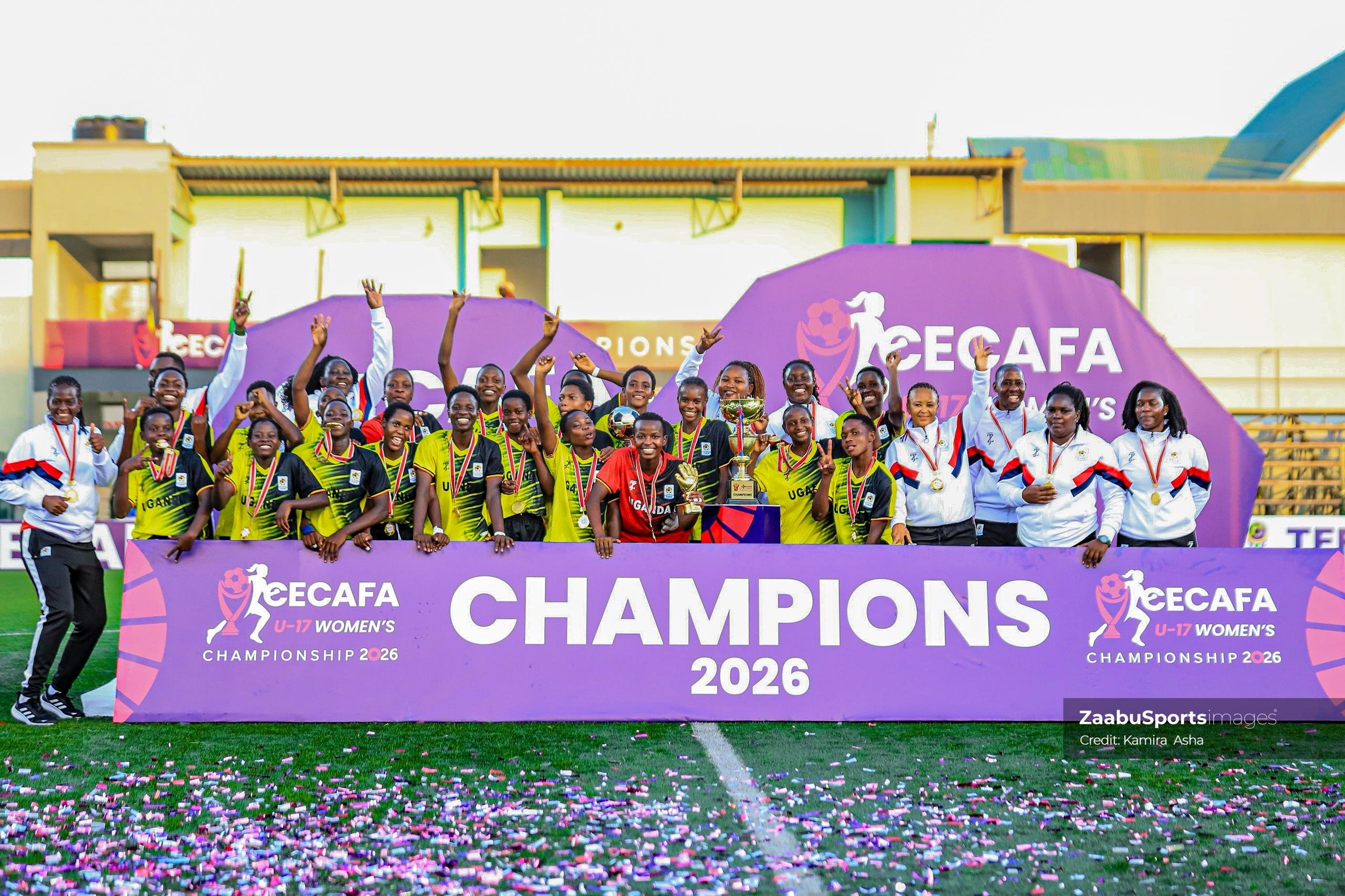
Uganda's U-17 women's national team, the Teen Cranes, have successfully retained the 2026 CECAFA U-17 Women's Championship title, overcoming regional rivals with a blend of tactical organisation and attacking efficiency. Under the stewardship of head coach Sheryl Ulanda Botes, the team navigated a competitive group stage and a decisive semi-final victory over Kenya before triumphing in the final. This article dissects the underlying metrics that underpinned their success, including expected goals (xG), passes per defensive action (PPDA), and shot-creating actions.
Tactical Foundation: Defensive Solidity and High Pressing
The Teen Cranes' defensive structure was the bedrock of their campaign. In the group stage, they conceded just one goal across three matches, a record that reflects a well-drilled backline and a disciplined midfield screen. According to match data, their average PPDA (passes per defensive action) was 8.2, indicating an aggressive high press that forced turnovers in advanced areas. This pressing intensity disrupted opponents' build-up play, particularly against Kenya in the semi-final, where Uganda's PPDA dropped to 7.1, leading to several transition opportunities. The team's compact shape, with the defensive line pushing up to the halfway line, minimised space for opposition forwards and reduced their shot-creating actions.
Attacking Efficiency: Clinical Finishing and xG Overperformance
While the Teen Cranes created fewer total chances than some opponents, their efficiency in front of goal was exceptional. In the semi-final against Kenya, they registered 1.8 xG from 12 shots, converting three goals—an overperformance of 1.2 xG. This clinical edge was a hallmark of their tournament: across all matches, they scored 8 goals from a cumulative xG of 5.6. Shot-creating actions were led by winger Shadia Nantongo, who averaged 3.5 shot-creating actions per 90 minutes, often cutting inside from the left flank to deliver crosses or through balls. The Teen Cranes' ability to convert high-quality chances, particularly from set pieces (two goals from corners), proved decisive in tight matches.
Midfield Control and Transition Play
The midfield trio of captain Sarah Nakato, Grace Achieng, and Joan Nabawanuka provided the engine room for Uganda's transitions. Nakato's passing accuracy of 84% and her 2.1 progressive passes per 90 minutes were key to linking defence and attack. In the final, Uganda's midfield won 62% of duels, enabling quick transitions after regaining possession. The team's average pass completion rate of 78% in the attacking third reflected a patient build-up style, but they also demonstrated directness when opportunities arose—launching 15% of their passes long to exploit space behind defensive lines. This balance between possession and penetration kept opponents guessing and created mismatches.
Conclusion
The Uganda Teen Cranes' retention of the CECAFA U-17 Women's Championship title was no accident. It was built on a foundation of defensive discipline, aggressive pressing, and clinical finishing. By overperforming their xG and limiting opponents' shot-creating actions through a high PPDA, they proved that tactical intelligence can overcome raw talent. For aspiring analysts, understanding these metrics is key to unlocking deeper insights into the game. Unlock VIP Analytics to access advanced data tools. As the team looks ahead to future competitions, their data-driven approach will be crucial in maintaining regional dominance. For more on CECAFA tournaments, visit CECAFA Online. The Teen Cranes have set a benchmark for youth football in East Africa, and their success story is one of meticulous planning and execution.
